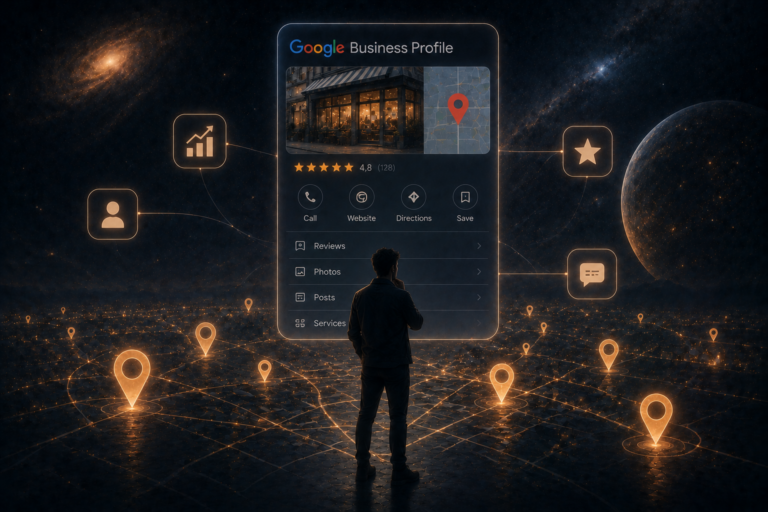
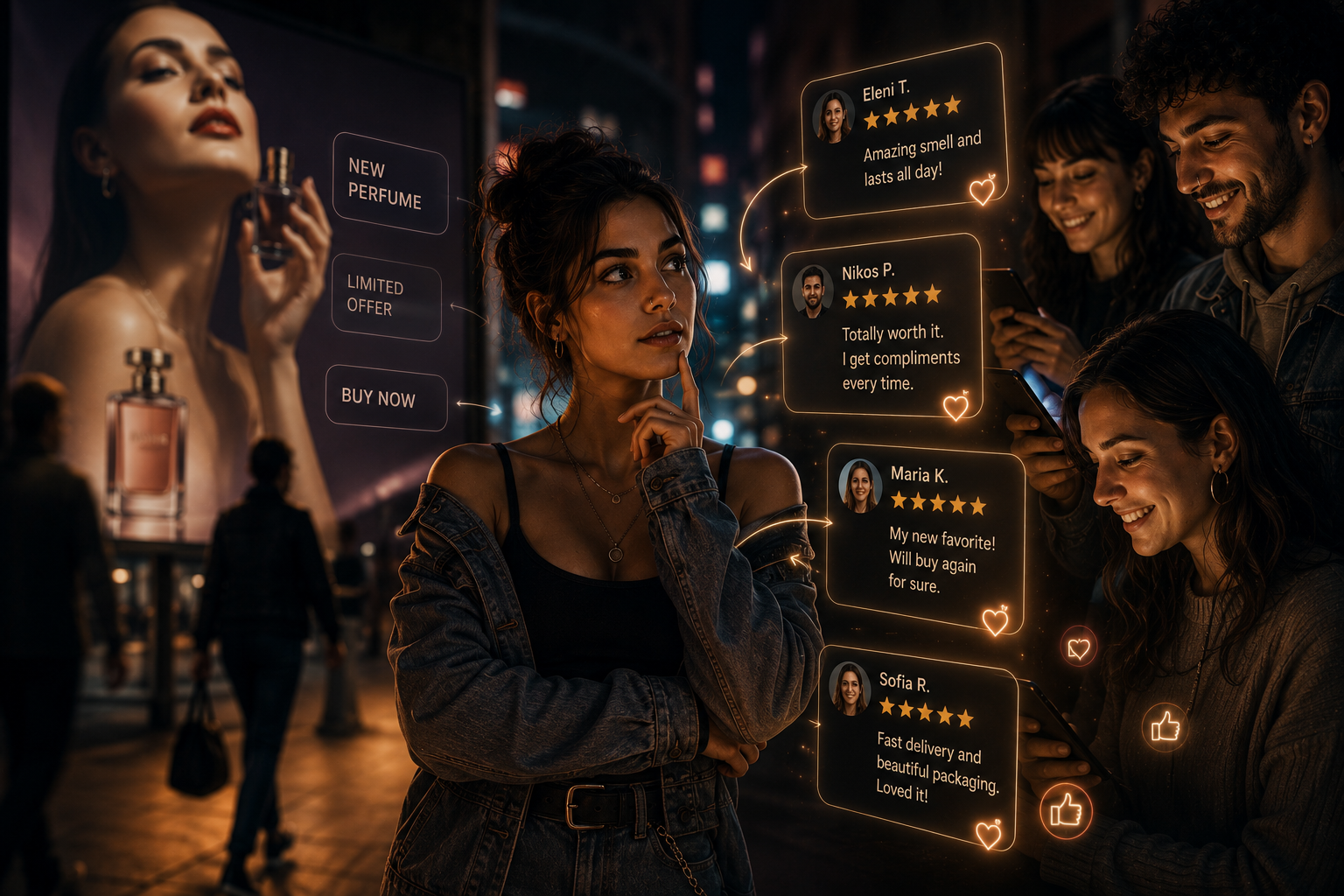
Before people buy something, book a table, choose a hotel, visit a clinic, or contact a local business, they usually do one very simple thing: they check what other customers have said.
It does not matter how polished the ad looks. It does not matter how beautiful the product photos are. At some point, most people want to know whether the experience lived up to the promise.
That is why reviews have become such an important part of modern buying decisions.
Ads can create awareness. They can introduce a product, promote an offer, or make a brand look attractive. But reviews often do something different. They help reduce doubt.
A good ad may make someone interested. A convincing review may make them feel safe enough to take the next step.
People Know That Ads Are Trying to Sell
Most people understand the purpose of advertising.
An ad is created by the business. Its job is to present the product or service in the best possible way. It will use the strongest message, the most attractive image, the best angle, and the most persuasive call to action.
That does not mean advertising is dishonest. Good advertising can be useful, creative, and informative. But consumers naturally read it with a degree of caution because they know it is designed to influence them.
Reviews feel different.
A review appears to come from someone who has already tried the product, visited the place, booked the service, or dealt with the company. That person is not speaking like a brand. They are speaking like a customer.
This makes the review feel more independent, even when the reader does not personally know the person who wrote it.
A customer saying “the staff were helpful,” “the room was clean,” “the delivery was fast,” or “the service was worth it” often feels more believable than a brand saying the same thing about itself.
Reviews Reduce the Risk of Making the Wrong Choice
Every purchase involves some uncertainty.
Will the product be as good as it looks? Will the service be professional? Will the hotel room match the photos? Will the food be worth the price? Will the company respond if something goes wrong?
The more important or expensive the decision is, the more people want reassurance.
This is especially true for healthcare, hospitality, professional services, beauty treatments, home services, travel, education, and online shopping. In these cases, people are not just buying an item. They are often trusting someone with their time, money, comfort, appearance, health, home, or business.
Reviews help because they answer questions that ads usually cannot answer in the same way.
They show what happened in real life.
Was the service on time? Did the team communicate well? Was the product durable? Was the space clean? Did the business solve the problem? Would the customer go back?
These details help buyers feel that they are making a more informed decision.
Social Proof Shapes How People Decide
People often look to others when they are unsure what to choose.
This is known as social proof. In simple terms, when we do not have enough information, we pay attention to what other people have done, chosen, or experienced.
We see this everywhere.
A busy restaurant often feels more appealing than an empty one. A product with hundreds of detailed reviews feels safer than one with no feedback. A local business with recent positive comments feels more trustworthy than a listing with no signs of customer activity.
Reviews are a digital version of that same instinct.
They tell the potential customer, “Other people have tried this before you.” That alone can make a decision feel less risky.
The number of reviews can also matter. A business with one perfect review may not feel as convincing as a business with many good reviews and a few realistic comments. People often look for patterns, not perfection.
If many customers mention good service, fast communication, clean rooms, quality products, or reliable results, the message becomes stronger.
Perfect Reviews Can Sometimes Feel Suspicious
People do not always trust a profile that looks too perfect.
If every review sounds overly positive, vague, or strangely similar, customers may become suspicious. They may wonder whether the reviews are genuine or whether negative feedback has been removed.
Real businesses are rarely perfect for every single person.
That is why a mix of mostly positive reviews, with a few more balanced ones, can sometimes feel more believable than a profile that looks artificially flawless.
What matters most is how the business responds.
A thoughtful response to a negative review can actually build trust. It shows that the business listens, takes feedback seriously, and does not disappear when something goes wrong.
On the other hand, an aggressive or defensive reply can do more damage than the original complaint.
Customers are not only reading the review. They are also watching how the business behaves under pressure.
Reviews Tell the Story Behind the Promise
Advertising often focuses on benefits.
A hotel may say it offers a relaxing stay. A restaurant may say it serves high-quality food. A software company may say its platform is easy to use. A clinic may say it provides professional care.
Reviews show what those promises look like in practice.
A guest may mention that the room was quiet and the staff helped with local recommendations. A restaurant customer may describe the atmosphere, the service, and the dish they loved. A client may explain that the team answered quickly and solved a problem without making the process stressful.
These small details feel human.
They give potential customers a sense of what the experience may actually be like. That is often more useful than a polished statement from the business.
People do not only want to know what a company offers. They want to know how it feels to deal with that company.
Reviews Are the Modern Version of Word of Mouth
People have always trusted recommendations.
Before online reviews, someone might ask a friend, “Do you know a good dentist?” or “Have you stayed at this hotel?” or “Is this restaurant worth visiting?”
That behaviour has not disappeared. It has simply moved online.
Today, people read Google reviews, product ratings, Facebook comments, TripAdvisor feedback, marketplace reviews, Reddit discussions, TikTok comments, and forum threads. They collect impressions from strangers in the same way they once collected recommendations from friends.
A personal recommendation from someone we know is still extremely powerful because it comes with existing trust. But online reviews offer something different: volume.
Instead of hearing one opinion, people can quickly scan dozens or hundreds of experiences. This helps them build a broader picture before deciding.
People Are More Skeptical of Advertising Than Before
Consumers are exposed to advertising constantly.
They see ads on social media, search engines, YouTube, websites, apps, newsletters, and influencer content. Because of this, many people have become more selective about what they believe.
They may still respond to ads, especially when the message is relevant and the offer is strong. But they often use reviews as a second step.
The customer journey may look like this:
They see an ad.
They feel interested.
They search for the brand.
They read reviews.
They compare alternatives.
Then they decide.
In this process, the ad opens the door, but the reviews help determine whether the person walks through it.
This is why businesses should not treat advertising and reviews as separate worlds. A strong ad campaign can bring attention, but poor reviews can stop people from converting. Good reviews, on the other hand, can make paid campaigns more effective because they support the trust behind the message.
Fake Reviews Have Made Authenticity Even More Important
Reviews are powerful, but they are not perfect.
People know that fake reviews exist. They know that some businesses try to manipulate ratings, encourage only positive feedback, or remove criticism where possible. This has made consumers more careful.
That is why authenticity matters so much.
Real reviews often sound specific. They mention details. They describe the experience naturally. They may include small imperfections while still being positive overall.
Generic reviews that all sound the same are less convincing.
For businesses, the lesson is clear: do not chase a fake image of perfection. Focus on creating real experiences that people are willing to talk about.
Ask for honest feedback. Make it easy for satisfied customers to leave reviews. Respond respectfully. Learn from criticism. Use reviews not only as marketing material, but as a source of insight into what customers actually value.
What This Means for Businesses
If people trust reviews more than ads, then reviews should not be treated as an afterthought.
They are part of your reputation.
A business that spends money on advertising but ignores customer experience will eventually face the consequences in public feedback. If the product disappoints, the service is inconsistent, or communication is poor, reviews will reveal that gap.
On the other hand, a business that delivers consistently can turn customer feedback into one of its strongest marketing assets.
This does not mean asking every customer for a five-star rating. It means building a process around trust.
Offer a good experience. Ask politely for feedback. Respond to reviews. Fix recurring problems. Show appreciation when customers take the time to write something. Use real comments to understand what people notice and what they care about.
When customers repeatedly mention the same strengths, those strengths can also become part of your marketing message.
For example, if many reviews mention fast replies, warm service, clean rooms, careful explanations, or excellent after-sales support, that tells you what your customers already value most.
Final Thoughts
People trust reviews more than ads because reviews feel closer to real experience.
An ad tells people what a business wants them to believe. A review shows what another customer actually experienced.
That difference matters.
Advertising can attract attention, but reviews help build confidence. They reduce uncertainty, provide social proof, reveal practical details, and show how a business behaves after the promise has been made.
For any business, especially a local one, reviews are not just stars on a profile. They are part of the customer journey, part of the brand reputation, and often one of the strongest reasons someone decides to choose you instead of someone else.
In a world full of marketing messages, the voice of a real customer can still be the most persuasive one.