A few years ago, the idea of following an influencer who is not a real person would have sounded strange.
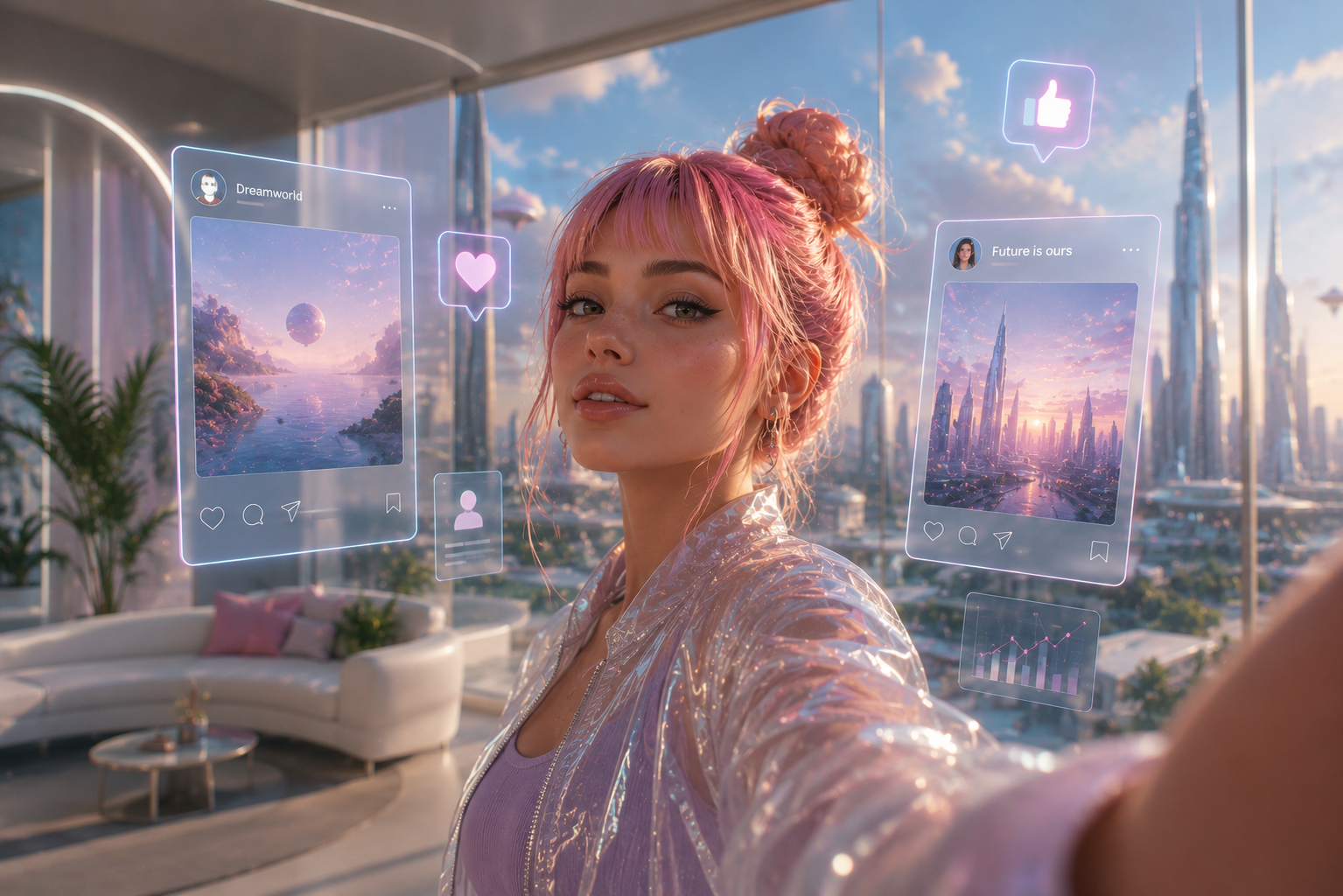
Today, virtual influencers are part of social media, fashion, entertainment, advertising, and digital culture. They have names, faces, personalities, storylines, brand collaborations, followers, and carefully managed public identities.
Some look almost human. Others are more obviously animated or fictional. But they all raise the same question: why do people follow someone who does not actually exist?
The answer is not only about technology. It is also about psychology, attention, identity, fantasy, branding, and the way people form connections online.
We do not only follow real people. We follow stories, aesthetics, characters, lifestyles, ideas, and digital worlds that make us feel something.
Virtual influencers sit exactly at that point between person, character, and brand.
What Is a Virtual Influencer?
A virtual influencer is a digitally created personality that behaves like an influencer on social media.
They may post photos, videos, opinions, fashion looks, product collaborations, lifestyle moments, or messages about culture and identity. They can appear in campaigns, attend digital events, promote products, and interact with followers through comments and captions.
But unlike human influencers, they are not living people.
They are created and managed by teams. Behind them, there may be designers, marketers, writers, agencies, brands, AI tools, 3D artists, or creative directors deciding how they look, what they say, what they wear, and which partnerships they accept.
That is what makes them interesting.
A virtual influencer is not a real person, but they are also not completely random. They are a designed identity. Every detail can be shaped: face, body, voice, values, style, background story, humour, beliefs, and behaviour.
In many ways, they are less like people and more like ongoing fictional characters placed inside real social platforms.
We Are Drawn to What Feels New and Unusual
One reason virtual influencers attract attention is simple: they stand out.
Social media feeds are crowded. People see endless selfies, product posts, travel photos, lifestyle videos, ads, trends, and influencer collaborations every day. Much of it starts to feel familiar.
A virtual influencer interrupts that pattern.
When we see a face that looks human but know it is not fully real, our attention pauses for a moment. We may wonder who created it, how realistic it is, whether other people believe in it, and why a fictional person has thousands or even millions of followers.
That curiosity is powerful.
People often pay attention to things that create a small tension between familiar and strange. A virtual influencer looks like something we know — a person on social media — but also like something different. That difference makes the content more memorable.
For brands, this attention is valuable. In a world where users scroll past most advertising without thinking, anything that makes someone stop and look has marketing power.
We Can Form Attachments to Fictional Characters
People do not only connect with people they know in real life.
We become attached to characters from films, series, games, books, cartoons, streamers, celebrities, musicians, and public figures we have never met. We may care about their stories, admire their style, repeat their phrases, or feel comforted by their presence.
This is not new.
Virtual influencers use a similar psychological mechanism. If a digital character appears regularly in someone’s feed, has a consistent personality, shares “personal” moments, responds to trends, and interacts with followers, they can start to feel familiar.
The relationship is one-sided, but it can still feel emotionally real.
A follower may know that the virtual influencer is fictional and still enjoy seeing their posts. Just as we can care about a character in a film without believing they exist, we can follow a virtual influencer as a character inside a digital story.
The difference is that this story unfolds in the same spaces where real people post their lives.
That makes the line between fiction, branding, and social connection more blurred.
Their Perfection Is Part of the Appeal
Virtual influencers can be designed to look exactly right.
They do not wake up tired. They do not have bad skin days unless the creators choose to show them that way. They do not age unless the story requires it. They do not accidentally say something off-brand. They can appear in impossible locations, wear digital outfits, and fit perfectly into the aesthetic of a campaign.
This controlled perfection is part of their appeal.
Social media has always involved performance. Even human influencers carefully select photos, edit videos, choose captions, plan outfits, and present a version of life that is shaped for public viewing.
Virtual influencers simply make that constructed nature more obvious.
They are not pretending to be spontaneous in the same way. Their whole existence is designed. For some followers, that is not a problem. It is the point.
They are visually interesting, stylish, polished, and slightly unreal. People may follow them not because they seem authentic in the traditional sense, but because they offer a fantasy.
Brands Like Them Because They Offer Control
For companies, virtual influencers can be very attractive.
A human influencer has a real personality, personal opinions, private life, changing moods, past mistakes, and future unpredictability. That is part of what makes human influencers powerful, but it also creates risk.
A virtual influencer can be controlled far more carefully.
The brand or creative team can decide what they say, how they appear, what values they represent, what collaborations they accept, and how they evolve over time. They can be adapted for different campaigns, languages, styles, locations, and audiences.
They can also do things that would be expensive, difficult, or impossible in real life. A virtual influencer can appear in a futuristic city, underwater, in a fantasy environment, or inside a digital fashion campaign without the same production limitations.
This makes them useful for industries such as fashion, beauty, gaming, entertainment, luxury, technology, and youth culture.
But control has a downside.
The more controlled something feels, the harder it can be for people to trust it.
The Trust Problem
The biggest challenge for virtual influencers is trust.
People may enjoy them, but do they believe them? Do they trust their recommendations? Do they understand who is speaking? Do they know when content is sponsored? Do they know which company or team is behind the character?
These questions matter.
A human influencer can say, “I tried this product.” A virtual influencer cannot experience a product in the same human way. They cannot taste food, feel fabric, stay in a hotel room, use skincare on real skin, or receive a service with genuine emotions.
That does not mean they cannot promote products. But it does mean the rules of trust are different.
A virtual influencer can represent a brand world, create atmosphere, tell a story, or attract attention. But if they are used as though they have real personal experience, the audience may feel misled.
Transparency becomes essential.
People need to know that the character is virtual. They also need to know when a post is advertising and who is behind the message.
Without that clarity, the campaign may feel manipulative rather than creative.
Maybe We Do Not Always Need Them to Be Real
One of the most interesting things about virtual influencers is that many followers do not necessarily care whether they are real.
They may follow them as entertainment.
The appeal may come from their style, humour, world, design, personality, or the story built around them. In that sense, they are closer to fictional characters than traditional influencers.
We do not expect a cartoon character, a video game hero, or a film protagonist to be real in order to enjoy them. We only need the character to be interesting enough to hold our attention.
Virtual influencers work in a similar way.
People may not follow them because they believe they are genuine people. They follow because the character offers something: a look, a mood, a fantasy, a story, a visual identity, or a glimpse into a carefully built digital universe.
This changes how we think about influence.
Influence does not always come from reality. Sometimes it comes from narrative.
Social Media Already Blurs Reality
Virtual influencers feel strange partly because they reveal something uncomfortable about social media: much of it is already constructed.
Human influencers also use filters, editing, scripts, planned photoshoots, brand deals, content calendars, and carefully managed personal brands. Even when the person is real, the version we see online is often curated.
Virtual influencers push this logic further.
They show us a version of influence where the person is entirely designed. Instead of hiding the construction, they embody it.
This can make them feel fake, but it can also make them feel oddly honest. There is no illusion of a completely natural life. The audience knows they are watching a created persona.
The problem begins when the presentation is not clear. If a virtual influencer is designed to look human but the account does not make that clear, the audience may not be able to judge the content properly.
In a media environment already full of filters, AI images, sponsored content, and edited realities, clarity matters more than ever.
Why People Engage With Them
People may follow virtual influencers for many different reasons.
Some are curious. Some like the aesthetic. Some enjoy the storytelling. Some are interested in technology. Some follow because the character is attached to fashion, gaming, music, beauty, or pop culture. Others may simply enjoy seeing something different in their feed.
Engagement does not always mean deep belief.
A person can comment on a virtual influencer’s post in the same way they might comment on a fictional character, meme account, or brand mascot. The interaction can be playful, ironic, emotional, or aesthetic.
That makes virtual influencers flexible. They can function as influencers, characters, mascots, creative projects, or brand ambassadors.
But that flexibility is also what makes them complicated. The audience may not always know how seriously to take them.
The Ethical Questions
Virtual influencers raise important ethical questions.
Who is responsible for what they say? Should they promote beauty products, financial services, health advice, or political messages? How clear should the account be about being fictional? Should followers know which company controls the persona? Should sponsored posts be labelled more clearly because the “person” recommending the product cannot actually use it?
These are not small issues.
If a virtual influencer promotes a lipstick, the risk may be mostly about transparency and beauty standards. If a virtual influencer promotes health advice, investment products, or social causes, the stakes become much higher.
The more human these characters appear, the more important disclosure becomes.
The audience deserves to understand what they are seeing: a real person, a fictional persona, a brand-owned character, an AI-generated identity, or something in between.
What This Means for Marketing
For marketers, virtual influencers can be creative and powerful, but they are not suitable for every business.
They can work well when the goal is storytelling, attention, innovation, style, entertainment, or building a distinctive brand world. They may be useful for brands that want to appear futuristic, playful, experimental, or visually bold.
However, they may not be the right choice for every industry.
Businesses that depend heavily on personal trust, care, human expertise, or emotional connection need to be careful. In areas such as healthcare, therapy, legal services, education, and sensitive professional advice, replacing a human voice with a fictional character may create distance rather than trust.
The question should never be, “Can we use a virtual influencer because it is trendy?”
The better question is, “Does this actually support the brand, the audience, and the message?”
If the answer is no, the result may look impressive but feel empty.
Final Thoughts
We follow virtual influencers because people do not only respond to reality. We respond to characters, stories, images, symbols, fantasy, beauty, humour, and identity.
A virtual influencer may not exist as a person, but it can still exist as a social presence.
That is what makes the phenomenon so interesting. These digital figures are not human, but they operate in spaces designed for human connection. They can feel familiar, stylish, entertaining, and even emotionally engaging, while still being fully constructed.
The future of virtual influencers will depend less on how realistic they become and more on how honestly they are used.
When they are transparent, creative, and clearly presented as digital personas, they can be a fascinating form of storytelling and brand expression.
When they are used to confuse, manipulate, or imitate human trust without disclosure, the issue is not that they are unreal.
The issue is that they are pretending reality does not matter.