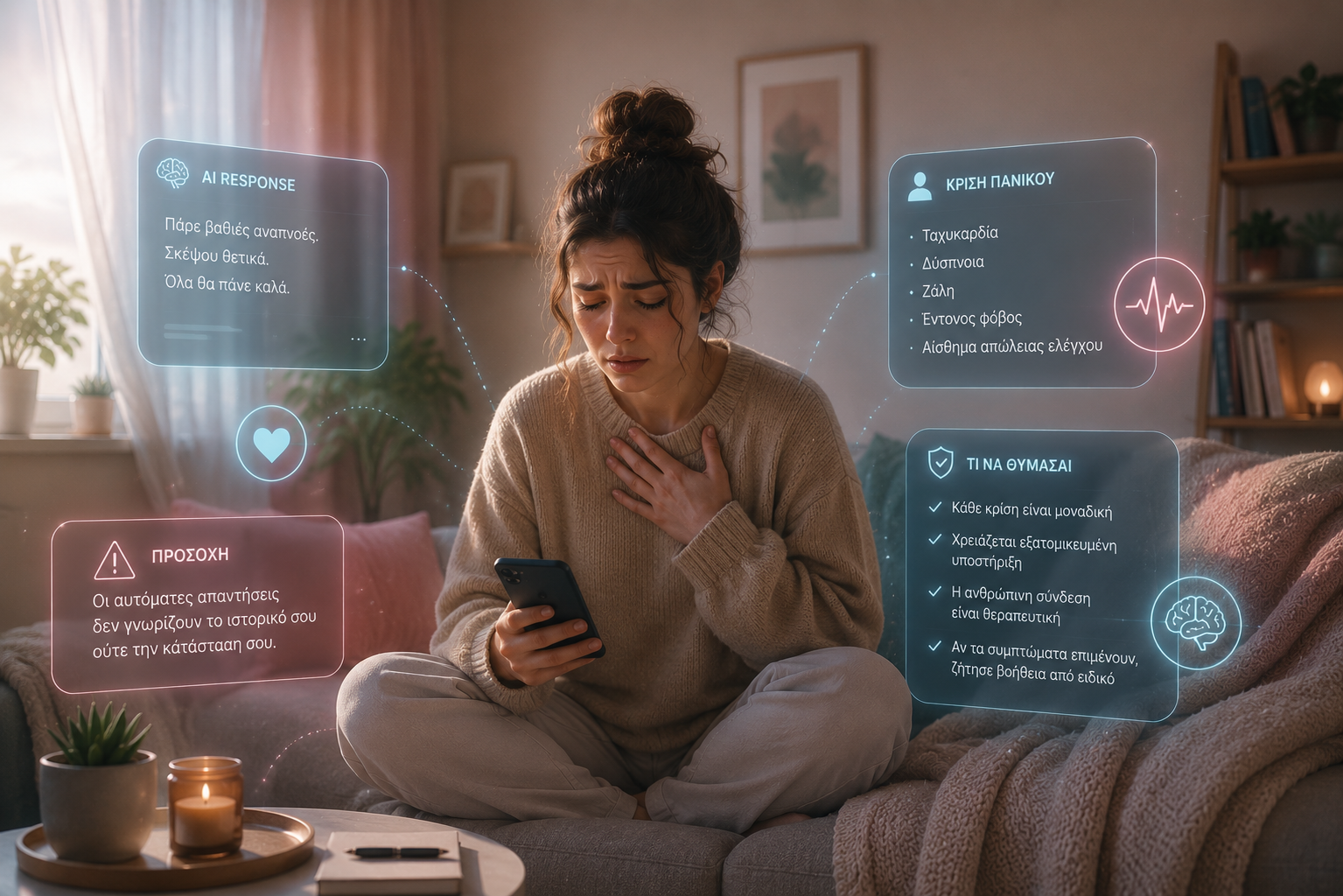
A panic attack can feel as if something terrible is happening inside the body.
The heart races. Breathing changes. The chest may feel tight. Hands may go numb. The mind starts moving fast. A person may feel they are losing control, about to faint, going crazy, having a medical emergency, or even dying.
In that moment, it is completely understandable to look for immediate help.
And today, immediate help is often not another person. It may be a phone. A search bar. A chatbot. An AI system that replies within seconds.
That can feel comforting. In some situations, it may genuinely help. It may remind someone to slow down, focus on the present, try a grounding exercise, or remember that panic attacks, however frightening, usually pass.
But this is also where caution is needed.
A panic attack is not just “a bit of stress.” It is an intense physical and emotional experience, and the person going through it is often in a very vulnerable state. Automatic responses, even when well-intentioned, can be too general, too confident, poorly matched to the person, or simply not enough.
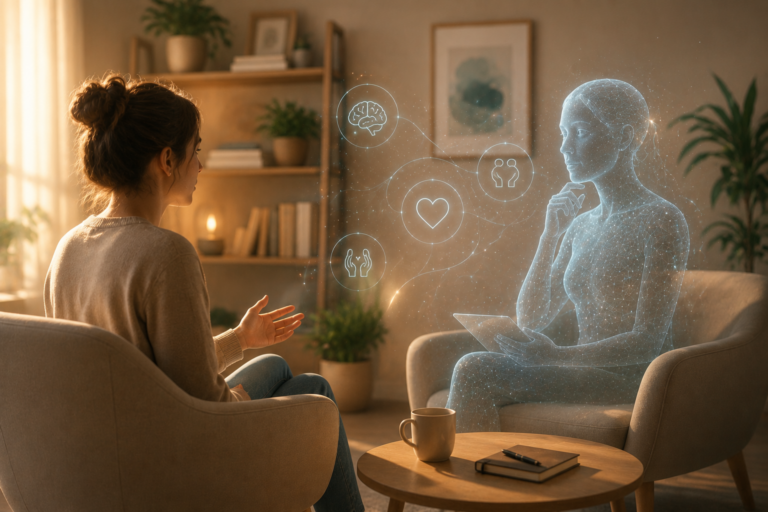
AI can be a useful support tool.
But when panic attacks are involved, it should not be treated as a therapist, doctor, or crisis professional.
What Is a Panic Attack?
A panic attack is a sudden wave of intense fear or distress, often accompanied by strong physical symptoms.
It may seem to appear out of nowhere, or it may happen in situations the person has started to associate with danger, pressure, embarrassment, or loss of control.
Common symptoms can include a racing heart, shortness of breath, dizziness, trembling, sweating, chest tightness, nausea, numbness, a choking sensation, feeling detached from the body or reality, and a strong fear that something terrible is happening.
What makes panic so frightening is that the body seems to confirm the fear.
The person is not only thinking, “I am scared.”
They feel danger in their body.
That is why phrases such as “don’t worry” or “it’s nothing” usually do not help. Sometimes they make the person feel even more alone, misunderstood, or ashamed.
A panic attack needs calm, careful support. Not rushed reassurance.
Why People Turn to AI During Panic
The reason is simple: AI is available.
It has no opening hours. It does not require an appointment. It does not get tired. It does not react with visible judgement. It can answer at three in the morning, when someone is alone in their room and feels they cannot breathe.
That availability matters.
There is also another reason. During a panic attack, a person often wants certainty. They want someone, or something, to tell them:
“You are not in danger. This is panic. It will pass.”
AI can say that quickly.
The problem is that it cannot always know whether it really is a panic attack.
It cannot fully assess medical history, physical symptoms, risk factors, context, or whether something may need urgent medical attention.
And that is a serious limitation.
The Main Problem: AI Cannot Fully Assess Risk
Many panic symptoms can look like symptoms of physical health problems.
Chest pain or pressure, shortness of breath, dizziness, palpitations, weakness, numbness, or feeling faint can happen during panic. But in some cases, they may also require medical evaluation.
This does not mean every panic attack is a medical emergency.
It means AI should not give absolute reassurance such as “this is definitely just anxiety” or “you do not need to speak to a doctor.”
Those sentences can be risky.
A health professional can ask about new or unusual symptoms, take medical history, consider risk factors, and decide whether further assessment is needed.
AI cannot do this in the same way.
If someone relies on it completely, there are two possible dangers. They may ignore something important, or they may become even more frightened by an answer that is too alarmist or poorly phrased.
Both can be harmful.
Automatic Advice Can Be Too General
Panic does not feel the same for everyone.
One person fears a heart attack. Another fears losing control. Another fears fainting in public. Another fears going mad. Another fears being trapped somewhere. Another fears being seen and humiliated.
An automatic response may offer a standard suggestion: “take deep breaths,” “think positively,” or “try to relax.”
But that is not always enough.
In some cases, it may not help at all.
For some people, focusing too much on breathing can increase panic because it makes them monitor the body even more closely. Others may panic if they feel they are not breathing “correctly.” Some people first need grounding in the outside environment rather than more attention on internal sensations.
This is why individualisation matters.
A psychologist does not simply hand over a technique. They observe how the person responds to it. They ask whether it helps or makes things worse. They adapt. They test things with the person over time.
AI can suggest tools.
It cannot responsibly monitor how those tools work for this specific person in the same way a clinician can.
Reassurance Can Become Part of the Panic Cycle
During panic, reassurance-seeking is very common.
The person wants to know they are not dying, not losing control, not going insane, not about to collapse.
Reassurance can help for a short time. But when it becomes constant, it can also keep anxiety alive.
Why?
Because the brain starts learning that calm only comes after external confirmation.
If every physical sensation leads someone to ask AI, “Is this panic or something serious?”, they may become dependent on the answer. The relief lasts for a while, but doubt returns.
“What if this time it is not panic?”
“What if the AI is wrong?”
“What if I should ask again in a different way?”
The tool that first seemed helpful can become part of the checking cycle.
That does not mean the person is doing something wrong. When you are frightened, seeking certainty is human.
But long-term recovery from panic is often not about getting endless reassurance. It is about learning to tolerate uncertainty, understand the fear cycle, and stop organising life around avoidance and checking.
Panic Attacks Need Context, Not Only Techniques
Many people search for “what to do during a panic attack” and expect a technique.
Breathing. Grounding. Counting. Distraction. Relaxation.
These can help.
But long-term work with panic is not only about finding a trick to stop the attack. It is about understanding what the person fears inside the attack, how they interpret body sensations, what they avoid, and how the fear of panic itself keeps the cycle going.
For example, someone may have a panic attack on the metro and then start avoiding the metro. Then buses. Then crowded places. Then travel. Not because they are weak, but because the brain is trying to protect them from feeling that fear again.
But when avoidance grows, life becomes smaller.
At that point, the person needs more than an automatic answer.
They need a treatment plan, careful support, and often professional guidance.
AI Can Sound Certain Even When It Should Not
One specific risk with AI systems is that they can sound very confident, even when the situation requires caution.
In mental health, that confidence can be dangerous.
A person in panic is already frightened. A highly certain answer can affect them strongly.
If the answer minimises risk, the person may delay getting help. If the answer overemphasises danger, it may intensify the panic.
Good support in these moments needs balance.
Not: “It’s nothing.”
Not: “This could be something terrible.”
But something closer to:
“These symptoms can happen during panic attacks. But if they are new, unusual, very intense, different from what you have experienced before, or if you are unsure about your physical health, it is safer to seek medical advice now.”
That balance is not easy.
It requires judgement, not just fluent language.
Privacy and Personal Information Matter
During a panic attack, people may write very personal things.
They may describe fears, trauma, medication, diagnoses, family issues, shame, intrusive thoughts, or experiences they have never shared with anyone.
Before sharing this kind of information with an AI tool, it is worth thinking about where the information is going, what platform is being used, what privacy policy applies, and whether the person is comfortable sharing such sensitive details.
This does not mean digital tools should never be used.
It means mental health information is deeply personal.
The comfort of an immediate answer should not make us forget privacy.
When AI Can Help More Safely
AI can be useful when it is used as a complementary tool, not as the only source of help.
It may help someone write down what happened before, during, and after a panic attack.
It may help organise thoughts before speaking with a psychologist or doctor.
It may remind someone of a grounding exercise they have already practised in therapy.
It may help them find clearer words for what they are experiencing.
It can also offer basic psychoeducation: what the panic cycle is, why body sensations feel so frightening, how avoidance can maintain fear, and why treatment can help.
These uses can be valuable.
But the safest use of AI is one that moves the person toward better care, not one that leaves them alone with a chatbot.
AI can be a bridge.
It should not become the only support.
When a Person Is Needed, Not a Chatbot
There are moments when help should not come only from an AI tool.
If symptoms are new, very intense, different from previous panic attacks, or include severe chest pain, fainting, major difficulty breathing, neurological symptoms, or any serious concern about physical health, the person should seek medical help immediately.
If there are thoughts of self-harm, suicide, fear of harming someone else, severe emotional dysregulation, or a sense that the person cannot stay safe, immediate human support is essential.
That may mean contacting emergency services, a crisis line, a doctor, a therapist, or a trusted person nearby.
AI should not become the place where someone remains trapped when they need real care.
A Psychologist Does More Than Give Better Answers
The difference between a psychologist and AI is not simply that the psychologist gives more careful advice.
The difference is that a psychologist works with relationship, history, context, and responsibility.
They can explore when the panic attacks began, what maintains them, what the person avoids, how they interpret bodily sensations, how control plays a role, whether there is agoraphobia, trauma, depression, obsessive checking, or another issue that needs attention.
They also work between the attacks, not only during them.
Because recovery from panic does not happen only at the moment of panic. It also happens when the person learns not to fear panic so much.
That work takes time.
It requires repetition, trust, adjustment, and a therapeutic relationship.
Final Thoughts
AI can have a place in supporting people who experience anxiety or panic attacks.
It can explain, organise, remind, and sometimes offer a first sense of calm.
But automatic responses need caution.
A panic attack is a moment of intense vulnerability. The person may feel they are dying, losing control, or unable to cope. In that moment, a generic, rushed, or overly confident answer can do harm.
AI cannot fully assess risk. It cannot replace a psychologist or doctor. It cannot hold a therapeutic frame. It cannot take responsibility in the way a trained professional can.
Its healthiest role is as a supportive tool, not a substitute for care.
Because during a panic attack, what a person needs is not only a fast answer.
They need safety, understanding, proper assessment, and, when necessary, a real human being who can stand beside them with responsibility.